Tools and devices
Molecular machines and nanopores
Living cells are full of machines built from single molecules: motors that walk along filaments, rotors that make the cell's energy currency, and pores that let chosen molecules through a membrane. Since the 1980s chemists have tried to build artificial counterparts. This page covers two strands of that work: molecular machines, which move, and nanopores, which detect.
Machines in nature
The Wikipedia article on molecular machines describes them as assemblies of a discrete number of molecular components designed to produce mechanical movement in response to specific stimuli, imitating switches and motors. It points out that naturally occurring molecular machines carry out vital processes such as copying DNA and making ATP, and names kinesins and ribosomes as examples, often in the form of complexes of several proteins. Those biological machines are the proof that the idea works; the question for chemists was whether they could design simpler ones from scratch.
Linking molecules mechanically
The key step was learning to join molecules without a chemical bond between them, like the links of a chain or a ring on a rod. The Nobel Prize popular information for the 2016 chemistry prize tells that story. It describes how earlier attempts in the 1950s and 1960s to make interlocked molecular chains produced tiny amounts by complicated methods, and how by the early 1980s the field was beset by weariness. The breakthrough came in 1983, when a French research group led by Jean-Pierre Sauvage used a copper ion to gather molecules into the right arrangement so that two rings could be closed through each other, forming an interlocked pair called a catenane.
The prize text then describes J. Fraser Stoddart's contribution. In 1991 his group made an electron-poor open ring and a long axle with two electron-rich sites. In solution the ring threaded onto the axle, attracted to the electron-rich parts, and the group then closed the ring so that it stayed on the axle, creating a rotaxane. When heated, the ring jumped back and forth between the two electron-rich sites like a tiny shuttle, and by 1994, the prize text adds, the movement could be completely controlled. The third laureate, Bernard L. Feringa, produced the first molecular motor in 1999, designing a molecule constructed so that it would rotate consistently in one direction, rather than jiggling back and forth at random as molecules normally do.
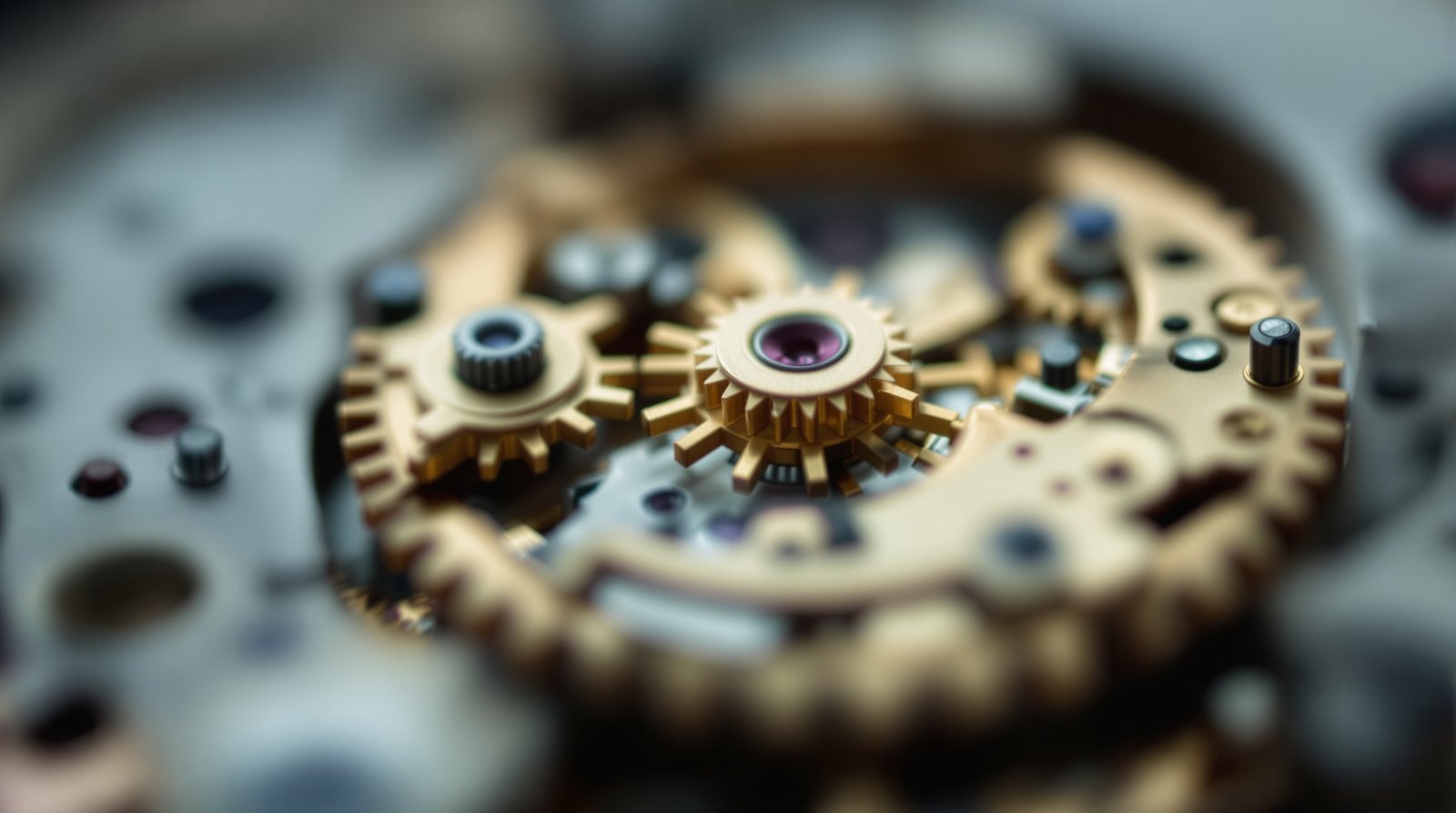
The 2016 Nobel Prize in Chemistry was awarded to Sauvage, Stoddart and Feringa for the design and synthesis of molecular machines. The prize text describes these machines as a thousand times thinner than a hair and, in an aside readers of the history of nanotechnology will enjoy, opens with Richard Feynman asking in a 1984 lecture how small machinery could be made. The molecular machine article adds that the first example of an artificial molecular machine, reported in 1994, was a rotaxane with a ring and two possible binding sites.
What makes a molecular machine hard
A molecule in solution is battered constantly by its neighbours, so random motion is the default. A useful machine has to turn that jostling, or a supply of chemical or light energy, into directed motion. That is why Feringa's motor was important: making something spin was easy, but making it spin in one direction required careful design. Papers in this field therefore spend most of their effort proving directionality and control, using spectroscopy to follow each step of a cycle, rather than simply showing that parts move.
Nanopores
A nanopore is a hole only nanometres wide. The Wikipedia article on nanopores explains that such a pore may be formed by a pore-forming protein or drilled into a synthetic material such as silicon or graphene. Set in an electrically insulating membrane, it can act as a single-molecule detector. A voltage applied across the membrane drives an ionic current through the pore; when a molecule of comparable size, such as a strand of DNA, passes through, it partly blocks the pore and the current drops, producing a characteristic signal for each passage.
The article describes three kinds of pore: a biological protein channel in a lipid bilayer, a pore in a solid-state membrane, and hybrids in which a protein channel sits in a synthetic membrane. It also records that the observation that different bases in a passing DNA strand shift the current in different ways led to the development of nanopore sequencing, reading the sequence of a DNA molecule as it threads through.
Connections
Nanopores and molecular machines share a theme: they are single molecular objects whose behaviour can be read one event at a time, not averaged over billions. That makes them powerful and also demanding to study. The measurements are noisy, each event is brief, and conclusions depend on statistics over many events. When reading a paper in either field, look for how many events or cycles were analysed and how the signal was separated from noise.
Several related subjects appear elsewhere in this guide. DNA itself has been used to build moving devices, described on DNA as a building material. The broader principle by which molecules organise themselves is covered on self-assembly. And the historical debate about whether general-purpose molecular assemblers are possible, which molecular machines are sometimes wrongly taken to have settled, is described on where the idea came from.